
Pelvic floor prolapse
Pelvic floor prolapse
Approximately 45-75% of women experience prolapse symptoms during their lifetime, such as uterine prolapse, vaginal prolapse or bladder prolapse. However, these can be prevented with good treatment. Take action today!
For a long time, the problem of prolapse was kept secret. It is one of the most common gynecological complaints in women and in most cases can be treated conservatively without surgery, especially by preventatively strengthening the pelvic floor.
Prolapse is not always curable, but the powerful function of a pelvic floor is always a good prerequisite for success and an improvement in quality of life.

What is a subsidence?
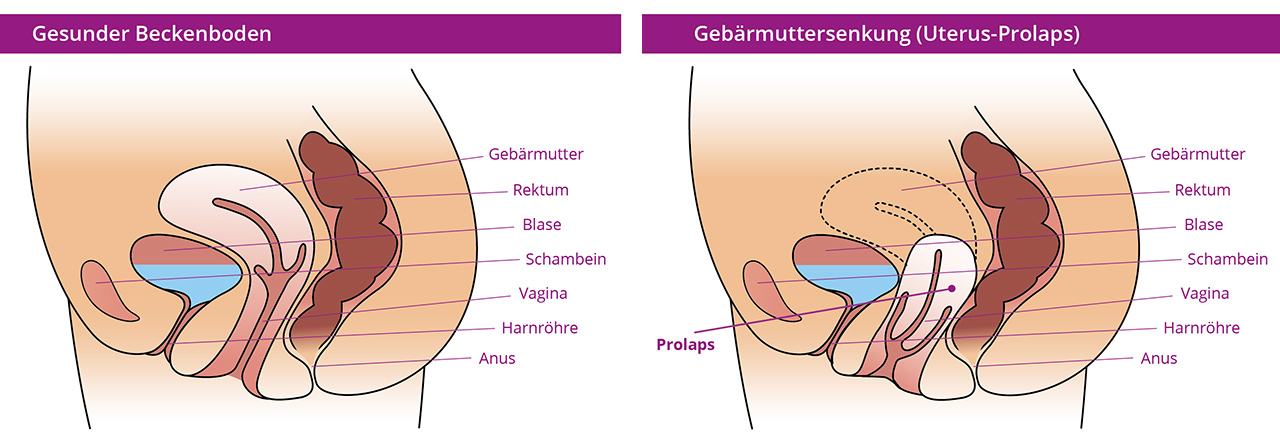
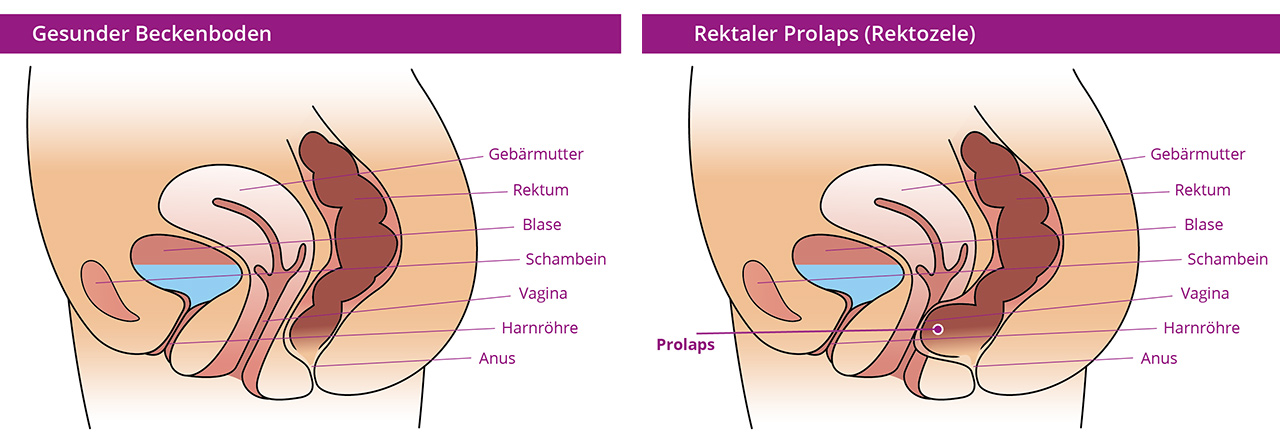
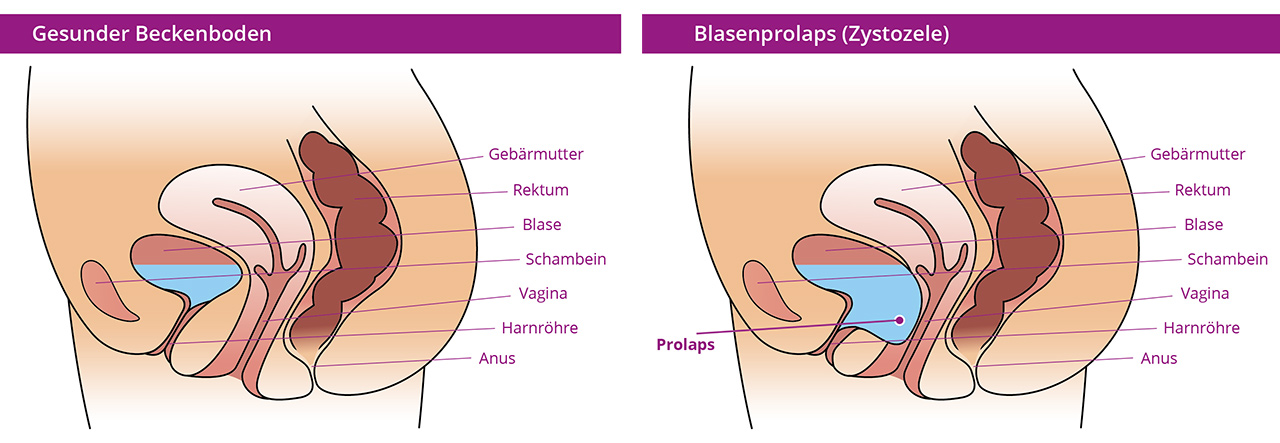
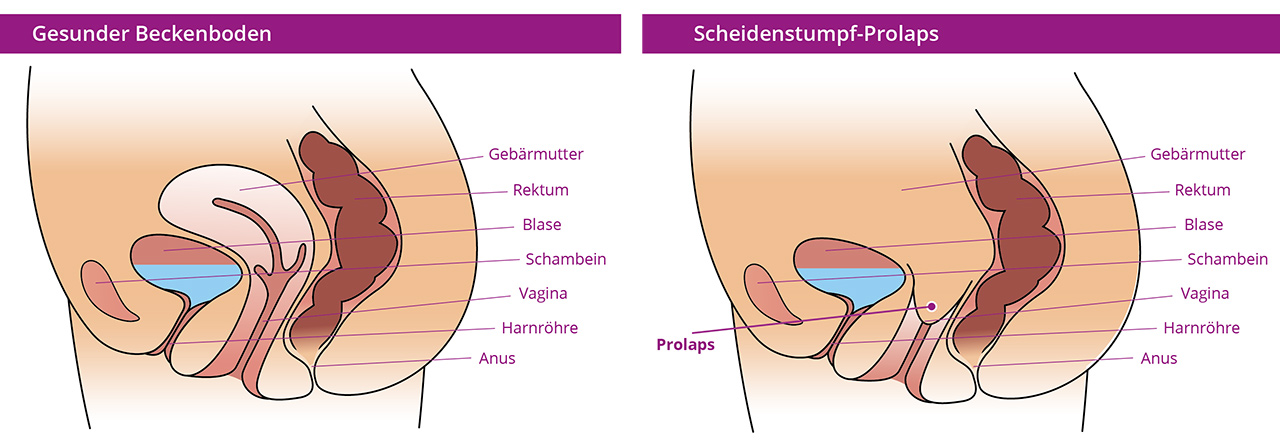
A prolapse in the pelvic floor area is the sinking of the bladder, rectum, uterus or vaginal stump towards the body opening. A prolapse is also known as a prolapse (organ prolapse) or descent. When suffering from prolapse, many women often feel as if something is “falling out” of the vagina. However, inflammation and pain in the vagina, especially during sexual intercourse, are also frequently described. The images below will help you to better understand the respective prolapse visually.
Symptoms may include
- Pressure and/or foreign body sensation
- Difficulty emptying the bladder and bowel
- Involuntary loss of urine
- Problems with sexual intercourse
- Inflammation of the sagging tissue due to rubbing against clothing
- Feeling of “losing something” beyond the vagina
Causes may include
- pregnancy
- birth
- Menopause (estrogen deficiency)
- Chronic heavy physical stress
- Obesity
- Connective tissue weakness
- Alter
- Genetic predisposition
Prolapse of the uterus (uterine prolapse)
Prolapse of the rectum (rectocele)
Prolapse of the bladder (cystocele)
Lowering of the vaginal stump
A prolapse is easy to treat. You can achieve a long-term and sustainable improvement in symptoms by actively strengthening and training your pelvic floor.
How does restifem work for prolapse problems?
In addition to the conventional support function for the vagina and uterus, restifem offers a type of abutment in the area of the posterior vaginal vault thanks to its special shape. This abutment counteracts the pressure in the abdominal cavity and thus ensures that the support structures are relieved of pressure in a more anatomically correct way. This relieves the pelvic floor muscles.
Preventive effect
Therapeutic effect
Back to balance

Take control
If you lose urine when coughing, sneezing, laughing or during physical exertion, you should actively strengthen your pelvic floor. Read how you can actively take control yourself.
The strong centre
The pelvic floor plays a central role in our body. It is the unknown muscle, which is the basis for strength, energy and wellbeing. Read how a strong centre can have a positive influence on your life.